
Bible Study Topics Every Wednesday Night 6:30 PM Eastern Time
Evergreen Church of God in Christ Worship Center
Invites you to join our Wednesday Night Bible Study, presented on Zoom - at 6:30 pm Eastern Time
Zoom Link:
Meeting ID: 875 3702 5063 Passcode: 598785
One Tap Mobile: 1.646.876.9923 Meeting ID: 875 3702 5063# Passcode: 598785#
Scroll beyond for summary and video clip of the lesson


Clip from the class
Key Outcomes:
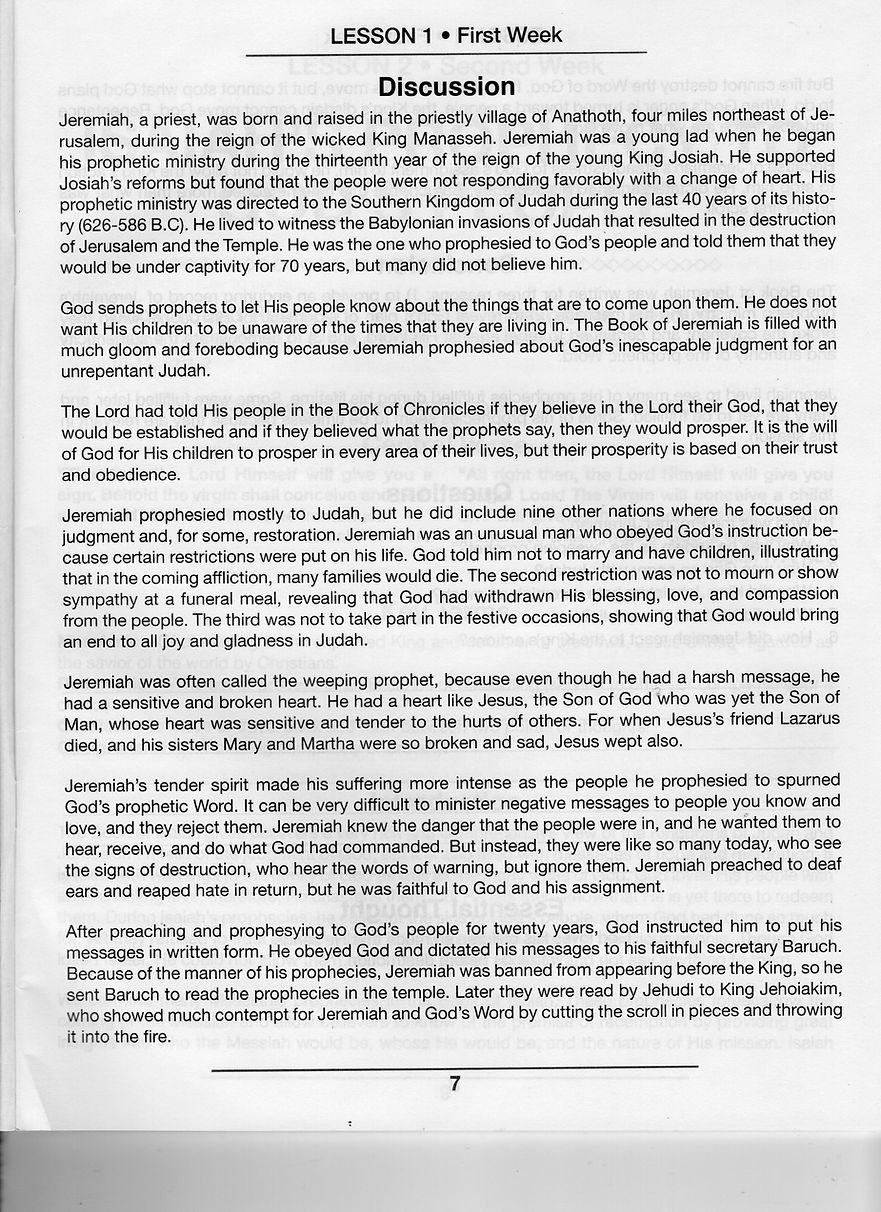
The session examined Jeremiah's prophetic ministry during Judah's final decades (626-586 BC), focusing on his role as God's messenger warning of judgment while demonstrating compassion for a rebellious people. The lesson emphasized that faithfulness to God's calling requires perseverance even when the message is rejected, drawing parallels between Jeremiah's time and today's society where truth is often unwelcome.
Main Teaching Points:
Jeremiah's Identity and Calling
-
One of five major prophets (Isaiah, Jeremiah, Ezekiel, Daniel, plus Lamentations authored by Jeremiah)
-
Raised in Anathoth, 4 miles northeast of Jerusalem, during King Manasseh's reign
-
Ministered for 40 years across five kings: Josiah, Jehoahaz, Jehoiakim, Jehoiachin, and Zedekiah
-
Called as young man to deliver God's warnings about Babylonian captivity resulting from Israel's idolatry and injustice
God's Restrictions on Jeremiah's Life
Three prophetic restrictions demonstrated what Judah would lose through judgment:
-
No marriage or children – illustrating that families would die in coming affliction
-
No mourning at funerals – revealing God had withdrawn blessing, love, and compassion from the people
-
No festive celebrations – showing God would end all joy and gladness in Judah
These sacrifices were not punishments but prophetic acts, making Jeremiah's lifestyle itself a sermon to the nation.
The Message and Its Rejection
-
Prophesied God's inescapable judgment for unrepentant Judah, earning him the label "gloom and doom prophet"
-
People flat-out refused to obey despite 40 years of warnings
-
King burned the scroll containing Jeremiah's prophecies (Jeremiah 36:4-5), attempting to destroy God's word
-
Jeremiah rewrote the scroll and added more content, demonstrating that fire cannot destroy God's word
Why "The Weeping Prophet"
-
Wept in secret places over the people's pride and coming exile (Jeremiah 13:17)
-
His tears symbolized empathy and compassion, not weakness – he cared deeply for people who rejected his message
-
Mirrors Jesus weeping over Jerusalem (Luke 19:41) and Paul weeping over unbelieving Jews (Romans 9:1-3)
-
Despite frustration, when Jeremiah tried to stop speaking, God's word became "as a burning fire shut up in my bones" that he could not contain
Theological Foundations:
Prophetic Authority
-
2 Chronicles 20:20: "Believe in the Lord your God, and you will be established. Believe his prophets and you will succeed"
-
Israel's prosperity tied directly to trusting God's messengers – rejecting Jeremiah meant rejecting God's provision
-
God sends prophets to warn people about coming events, not wanting His children unaware of the times they live in
God's Warning Process
-
God always gives choice before judgment – "If you will not hear" shows conditional nature of warnings
-
Warnings preceded by long-suffering – God held out His hands "all day long" to disobedient people (Romans 10:21)
-
70-year Babylonian captivity prophesied with promise of eventual restoration (Jeremiah 29:11, 30-31, 33)
-
New Covenant promised – God would write His law on people's hearts, fulfilled through Jesus Christ
Contemporary Application:
Parallels to Today's World
When asked to describe today's world in one word, participants responded: chaos, wicked, godless, ungodly, perilous, heading toward hell
Modern society mirrors Judah's condition:
-
Truth called lies, lies called truth – requiring Holy Spirit discernment
-
People reject correction and refuse to hear warnings about repentance
-
Cancel culture attempts to silence godly voices, like the king burning Jeremiah's scroll
-
Church attendance declining – people turn away despite clear signs of end times
Mandate for Believers Today
-
Answer the call – theme from Presiding Bishop J. Drew Sheard connecting to national Women's Convention
-
Cry aloud and spare not – continue speaking truth even when rejected
-
Cannot worry about people's response – obedience to God's mandate matters more than popularity
-
Holy boldness required – need Holy Spirit to make believers brave enough to spread unpopular messages
-
Ministry in deaf ears – Jeremiah's example teaches perseverance when nobody listens
Personal Reflection Questions
-
If God asked you to deliver unwanted message, would it be easy or difficult? (Consensus: difficult – people dislike you, risk persecution like Jeremiah faced)
-
Which is harder: telling truth or watching people ignore it? (Answer: watching them ignore truth – God doesn't want anyone to perish)
-
What has God restricted in your life that may be divine appointment rather than loss?
-
Are you ministering to deaf ears right now? What does Jeremiah teach about perseverance?
Decisions & Agreements
-
Repentance and obedience are what move God, not human attempts to hinder His plans
-
God's Word does not change regardless of Bible translations or attempts to remove passages
-
Faithfulness in obscurity and suffering is never wasted in God's economy
-
No denomination exists in heaven – acceptance of Jesus as Lord and Savior is the requirement